Purpose

The Purpose of this blog is to critique and analyze two different texts that are related to the topic at hand, The Nuclear Family. The authors will also be able to give the audience an understanding of the common similarities and differences between a family in the 1960's and a family now.

Monday, February 23, 2015

Raising Kids in Non Nuclear Families (article) - Logos

            There is a lot of logos present in this article in order to set the basis of the argument, which is if the Nuclear Family type of household back in the sixties were more beneficial than the common currently types of households consisting of single parents, single sex parents, and single generations. The primary method logos is applied is through different case studies and their findings.
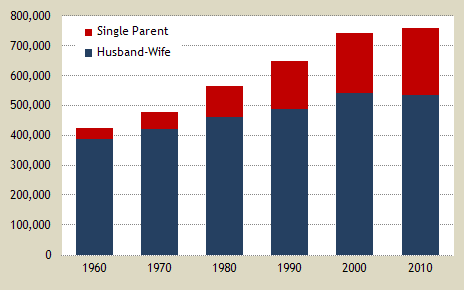
            The first type of household is single parenthood, and the author begins by stating 29.5% of American households were of single family. This is a two percent increase from 2000, and this article was written in 2013. 84.1% of the single parent households were also headed by the mother as opposed to the father at 15.9%. A nuclear household in the sixties had two parents and divorce was not common. Studies unanimously support traditional two parent households, mainly because of the financial security. The double parenting in turn leads to higher achievement inschool, lower levels of psychological distress, and later sexual activity. The logos mentioned for single parenting suggest that the Nuclear Family structured household was more beneficial to children.
            Most Nuclear Families also had a significant influence from grandparents. The author mentions one in twenty children in the United States grow up in a multigenerational household today, and these kinds of households have “more consistently positive outcomes.” One case study mentioned is of African American children and grades being higher in multigenerational families. Another case study from 1996 mentioned is about healthy habits and that kids are more likely to not smoke and drink if they’re raised in a home with grandparents. Again, these facts the author mentions propose the Nuclear Family structure from the sixties was more beneficial to children’s development.
            Homosexual parenting is another common type of household that is rapidly emerging today that did not exist in the sixties, as homosexuality was not deemed acceptable. Today however, one to nine million children has at least one gay parent. The author mentions common concerns about this type of structure such as the child will grow up sexually confused, socially inept, or not fully developed. Case studies the author mentions reveals that same sex parenting has no influence on psychological conditions of the child like depression or anxiety and does not have any correlation with drug use and bad behavior. Unlike the other two types of present day households, the logos the author mentions in this type of structure does not seem to be negative.

            The logos the author used was key in presenting the purpose of the article, which was comparing and contrasting different types of households found today and whether or not they are beneficial to the development of children. The statistics stated about single parents and non multigenerational households portrayed them in a bad light whereas the opposite occurred for homosexual households, as they seemed to have no effect on the children. By stating hard facts from case studies, the author maintains a professional and unbiased stance on the topic.

-Priyal Patel

Sunday, February 22, 2015

Raising Kids in Non-Nuclear Families- Stasis Theory

The typical family dynamic today is significantly different than that of the 1960's. Since we are becoming more tolerant of different practices such as same sex marriages and divorce, families and family structures have changed and evolved. Emily Kreid and Lizzie Bartlett, the authors of this article focus on the changes seen commonly in households and also critique the impact it has on the children.  

The authors present their argument by first stating the facts which show how there has been a significant increase in single parent, multigenerational, and same sex homes. When compared to the 1960's, modern day households are much different which raises the question of how these changes are impacting the homes themselves. The fact is that it does have an impact and through this article they evaluate how much of an impact. 

The root cause of all these changes lies in our ability to accept changes in the family structure and challenge the social norm of "family." Since same sex marriage is legal in most states and has been accepted widely, we are able question if there is a difference between the homes. Likewise, many couples are challenging the idea of marriage at 26 or 27 and decide to get married earlier. This leads to early pregnancies and divorce, which creates multigenerational households or a split home. With all the changes in society there are many questions as to how it will impact a traditional family setting. 


In terms of evaluation, many people can see that there is a change in how children are being raised and how families interact over time. However, the debate starts when deciding whether the change has impacted positively or negatively. The authors evaluate the change but also give advice on how to live a modern lifestyle but retain the genuine family aspect of house in the 1960’s. The advice leads to action that a family can take to manage their home. Before any rhetorical analysis has begun, the author and audience go through a series of quick checks to determine whether this is worth making an argument on or not. In this case, the authors highlighted the reason for changes in the household by stating facts and ended with advice that promotes action.

-Aparna Jayaram 

A Date With Your Family: Pathos

In the video "A Date With the Family," the audience is instructed on the protocol and expectations of a family dinner.  Through this instructive video, a portrait of the typical American family is painted.  Its members are white, two parents are present (a man and a woman), and there are three kids (two boys and one girl). The women are shown doing housework and preparing dinner, and the men are shown working on school work and coming back from a job.

Not only is this family portrayed to be "normal," but the creator of the video also uses the pathos rhetorical technique to portray them as being happy and content.  Throughout the movie, the characters are smiling and carefree.  The older son and daughter are described as being "quite content with life," because they are looking forward to dinner with their stereotypical family.  After the family sits down for dinner, the narrator says, "the dinner date has started, and they're all happy about it."  By using positive language and showing the family looking jovial and lively, the creator of the video appeals to the audience's emotional desire for happiness.  Coupling the happiness with the portrayal of a typical nuclear family, the video's creator is establishing the notion that having this type of family structure will lead to happiness.  It is interesting to consider that, while the expectation of a happy family in 1950s and 60s brings to mind the family shown in this video, a happy family today could be of any color, origin, sexual orientation, or structure.  A happy family today could have two dads, two moms, one parent, parents of different races, adopted children, or a number of other variations of the "traditional" family structure.  Clearly a revolution in the structure of the nuclear family has occurred from the 1960s to now.

A. Jacob Shapiro

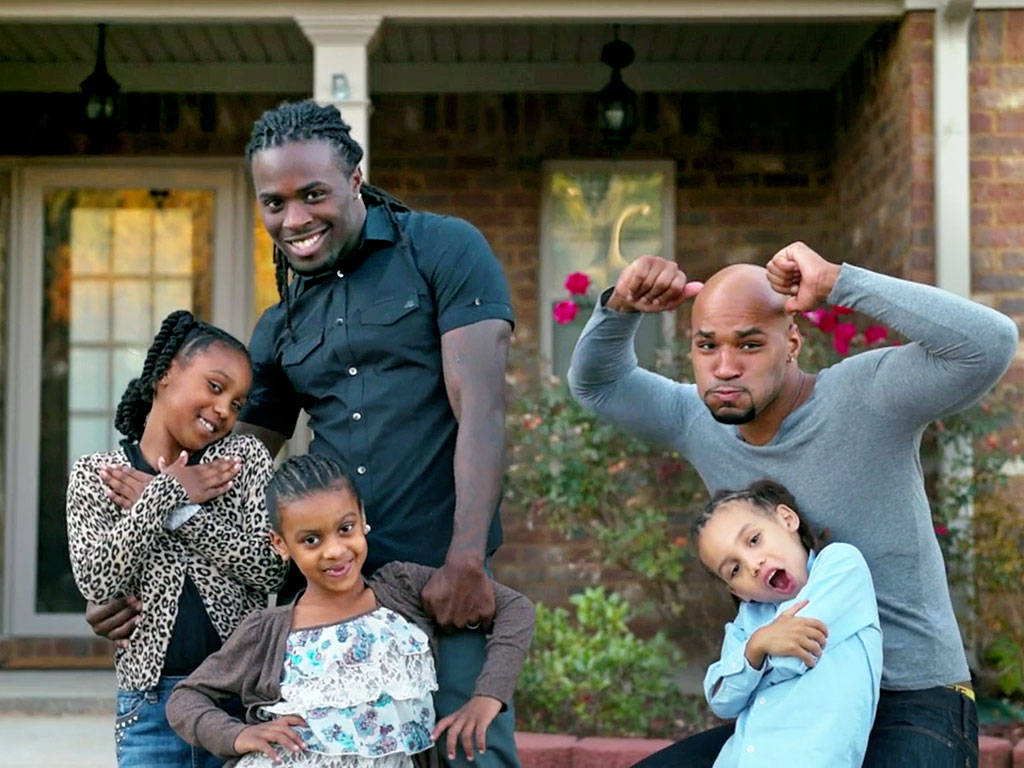
An example of what a 21st century family could look like

Raising Kids in Non-Nuclear Families (article)- Kairos and The Rhetorical Situation

The stereotypical family in the 1950’s comprised of a mother, father, two kids, and a dog. This image has significantly changed as the world becomes more approving of things like gay marriage and divorce. The author of this article focuses on three different structures of family and questions how each one impacts the upbringing of children in comparison to the traditional structure.
            The author may feel compelled to speak out about how different types of households affect children, academic wise for example, because he or she sees how the lack of grandparents in the household, or the lack of two parents raising a child, negatively impacts a kid. Other reasoning could be they were raised in the typical nuclear family in the fifties, and is eager to share how different family life was back then compared to today. Many things that were frowned upon years ago are becoming socially acceptable, like gay marriage.
The method the author chooses to address the audience is by going into detail about single parenthood, multigenerational households, and single sex parents by giving statistics and then giving their respective advantages and disadvantages. Throughout the article the author maintains a neutral tone, not leaning towards either side- the nuclear family in 1950 or the different types of familial households present today. This consistent tone is effective as it leaves the audience to think whether the changes in “social norm” are beneficial or if they are harming children and their development.

The author does not seem to be addressing any one group of people specifically, but perhaps it may hit harder to people who are raising children so they can compare their household to one of the types mentioned. The Kairos is interesting because this article was written during a time where some of these changes from the Nuclear Family have happened for quite some time, like single parenting, but other changes are still not totally accustomed to, like gay marriage. This allows for some debate whether all these different types of households are beneficial or not. 
-Priyal Patel

A Date with the Family (video): Kairos and the Rhetorical Situation

The 1960's were the first time that there was a social revolution sparking in the american public. Not only was there the civil rights movement but there were also a lot of changes happening to the "nuclear family", children were not upholding the values provided to them and were starting to become more rebellious.
What a "normal" family looked like in the 1950's 

This video was set in a "normal" family home in the 1950's. At this particular point in the day, the family is getting ready for their dinner-one of the most important parts of their day. The author sounds like an elderly gentleman that has a lot to share on something that he is knowledgable in. The father has just arrived, the boys are cleaning up, and the ladies of the household are setting up the table and cooking the food. This video is directed towards children to show them what it should be like during dinner as opposed to what was beginning to happen in that time period. Again, this was the first time that the country was experiencing this much change and boy was it a shock. In response there were shot films like this that tried to divert the attention of children growing up and put them back on "track". 
Why is there so much pressure placed on having a sound and "faked" dinner where everyone is happy-even if it is all a show? For this family, and many  in this time period and the periods before, family was the most important thing they had-aside god of course. This all seems weird to us because in this generation we aren't used to this much unity and authority of parents. However, we take for granted all that is happening now-a-days. This was not always the case and we have now learned that by watching this video. 

-Krishna Shah